
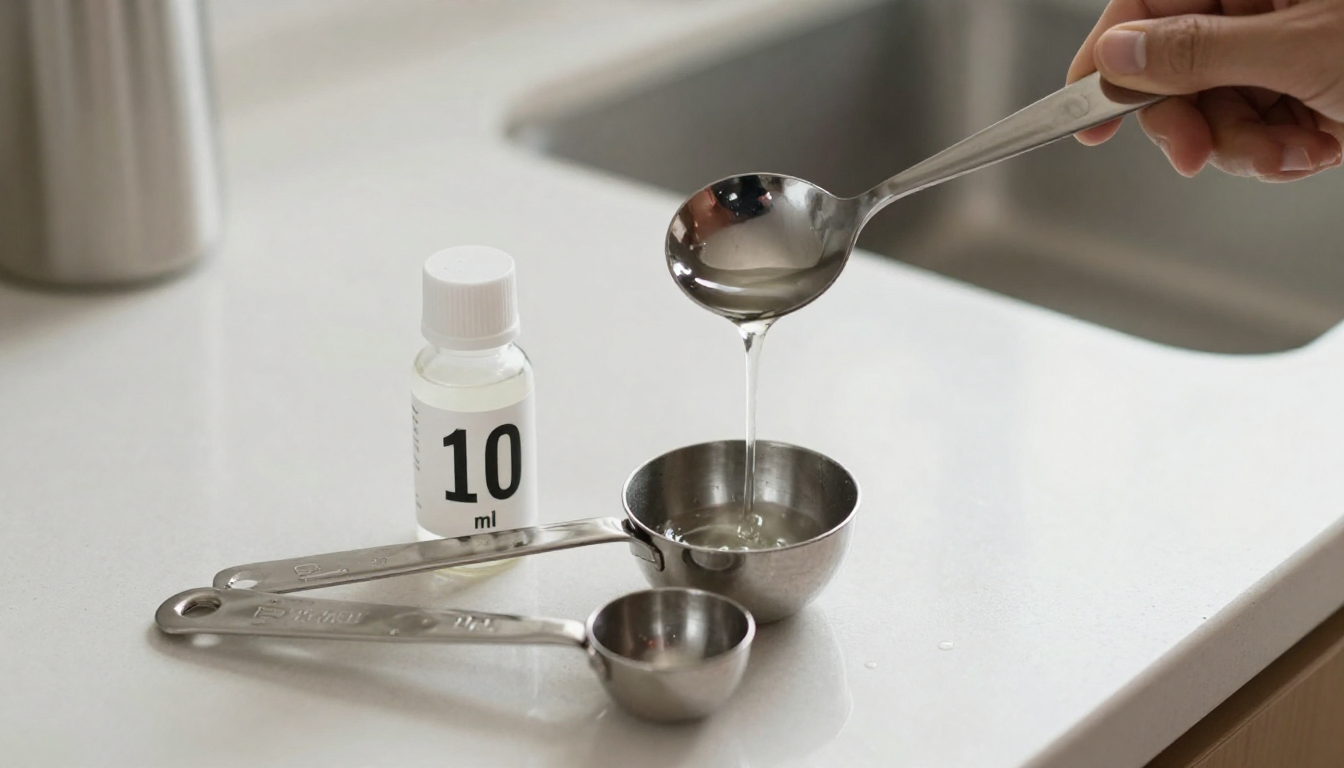
Measuring ingredients accurately is essential in many aspects of daily life, whether in cooking, baking, or medicine. One of the most common conversions people often encounter is “10 ml to tsp”. Understanding this simple conversion can prevent mistakes, improve recipes, and ensure proper dosages of liquid medications.
While milliliters (ml) are part of the metric system, teaspoons (tsp) are commonly used in the US customary and British imperial systems. This article will provide a comprehensive guide to converting 10 ml to tsp, explain practical applications, and offer tips for accurate measurements. By the end of this article, you will master this conversion and related calculations.
Understanding Milliliters and Teaspoons
What is a Milliliter (ml)?
A milliliter is a unit of volume in the metric system, equal to one-thousandth of a liter. It is widely used globally to measure liquids. Milliliters are part of the SI (International System of Units), which makes them standard in scientific experiments, recipes, and medical dosages.
Key points about milliliters:
-
Symbol: ml
-
Relation to liters: 1 ml = 0.001 liters
-
Common uses: Medicine, cooking, beverages, and laboratory work
For example, a standard small bottle of cough syrup may contain 100 ml of liquid.
What is a Teaspoon (tsp)?
A teaspoon is a unit of volume commonly used in cooking, especially in English-speaking countries. Unlike milliliters, a teaspoon is part of the US customary or British imperial systems.
Key points about teaspoons:
-
Symbol: tsp
-
Common volume: 1 tsp ≈ 4.92892 ml (US), 5 ml (approximation for practical purposes)
-
Uses: Cooking, baking, and small liquid measurements
When converting 10 ml to tsp, it is important to know which teaspoon standard you are using, although most people round 1 tsp = 5 ml for simplicity.
10 ml to tsp Conversion: Basic Formula
Mathematical Conversion
The simplest way to convert 10 ml to tsp is using the basic formula:
tsp=mlml per tsp\text{tsp} = \frac{\text{ml}}{\text{ml per tsp}}
For US teaspoons:
tsp=104.92892≈2.03 tsp\text{tsp} = \frac{10}{4.92892} \approx 2.03 \text{ tsp}
For practical purposes, most people round it to:
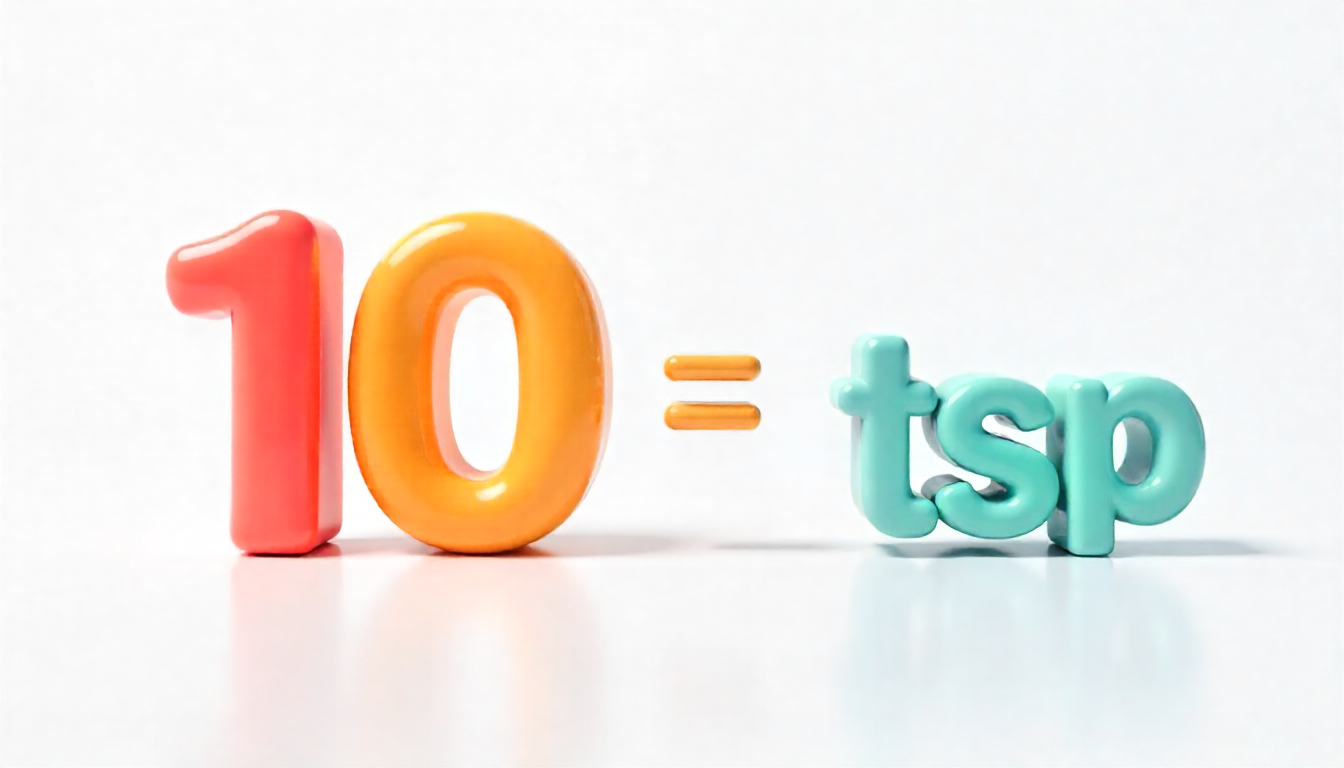
10 ml≈2 tsp10 \text{ ml} \approx 2 \text{ tsp}
This is the easiest way to remember the conversion in everyday use.
Using Online Tools
If math isn’t your strong suit, online conversion tools can instantly calculate 10 ml to tsp. Most kitchen and medical apps have built-in converters, making it convenient to measure ingredients accurately.
Benefits of online conversion tools:
-
Fast and accurate
-
Avoids mistakes in recipes or medicine
-
Works for multiple units (ml, tsp, tbsp, oz)
Practical Uses of 10 ml to tsp Conversion
Cooking and Baking
In cooking and baking, accuracy in measurements can make the difference between a successful dish and a disaster. Many recipes list ingredients in teaspoons, while some measuring tools use milliliters.
Examples:
-
Vanilla extract: A recipe may call for 10 ml of vanilla extract, which equals roughly 2 tsp.
-
Soy sauce: For sauces, 10 ml can be conveniently measured using a teaspoon.
Converting ml to tsp ensures that the flavors and textures of your dish remain consistent every time.
Medicine and Supplements
Medicine often comes in milliliters, while over-the-counter teaspoons are used at home. Understanding 10 ml to tsp is crucial for:
-
Children’s medication: Giving the correct dosage
-
Liquid supplements: Vitamins or herbal syrups
-
Cough syrups: Avoiding overdosing or underdosing
For example, if a cough syrup bottle indicates 10 ml per dose, it equals approximately 2 tsp, making it easier to administer using a standard teaspoon.
Chemical and Laboratory Work
In laboratories, small volumes are often measured in milliliters. While professional lab equipment uses precise instruments, informal conversions to teaspoons might occur in educational settings or home experiments.
Example:
-
A chemistry student may need 10 ml of a solution for an experiment. Converting this to 2 tsp can help when using standard kitchen measuring spoons for safe, small-scale activities.
Tips for Accurate Conversion
Using Proper Measuring Tools
Accuracy in measurement depends heavily on the tools used.
-
Measuring spoons: Standardized and calibrated, ideal for cooking
-
Syringes or pipettes: Perfect for medicine or lab experiments
-
Graduated cylinders: Used in labs for precise measurement
Always ensure that your measuring tools are clean and dry to maintain accuracy.
Common Conversion Mistakes
Even simple conversions like 10 ml to tsp can be prone to errors if attention is not paid.
-
Rounding too much: Using 1 tsp = 4 ml instead of 5 ml can lead to minor but cumulative errors
-
Confusing units: Tablespoons (tbsp) are larger than teaspoons (1 tbsp = 3 tsp)
-
Ignoring standards: US tsp ≠ UK tsp exactly, so conversions may differ slightly
By following proper standards, you can avoid mistakes and maintain consistency in recipes or medical doses.
Other ml to tsp Conversions
Understanding 10 ml to tsp can help with other measurements as well. Here’s a quick reference:
| Milliliters (ml) | Teaspoons (tsp) |
|---|---|
| 5 ml | 1 tsp |
| 10 ml | 2 tsp |
| 15 ml | 3 tsp |
| 20 ml | 4 tsp |
| 50 ml | 10 tsp |
This table makes it easy to convert larger or smaller volumes quickly.
Conclusion
Converting 10 ml to tsp is a simple but essential skill in cooking, medicine, and science. Understanding the relationship between milliliters and teaspoons ensures accuracy, consistency, and safety.
Remember:
-
10 ml ≈ 2 tsp
-
Use proper measuring tools for best results
-
Always be aware of the standards used (US vs UK)
With this knowledge, you can confidently measure liquids for recipes, medications, or small experiments without worrying about mistakes.
FAQs
Q1: How many teaspoons are in 10 ml?
A1: 10 ml is approximately 2 tsp (using the 5 ml per tsp standard).
Q2: Can I use a tablespoon instead of a teaspoon for 10 ml?
A2: Yes, but remember that 1 tbsp = 3 tsp, so 10 ml ≈ 2/3 tbsp.
Q3: Is 10 ml the same as 2 tsp worldwide?
A3: Mostly yes, but US tsp ≈ 4.92892 ml, while UK/metric tsp is 5 ml. The difference is minor in everyday use.
Q4: How do I measure 10 ml without a syringe?
A4: You can use 2 standard teaspoons or a small measuring cup with ml markings.
Q5: Why is it important to know 10 ml to tsp conversion?
A5: Accurate measurement is vital for cooking, baking, medicine, and lab experiments, preventing errors and ensuring consistency.