
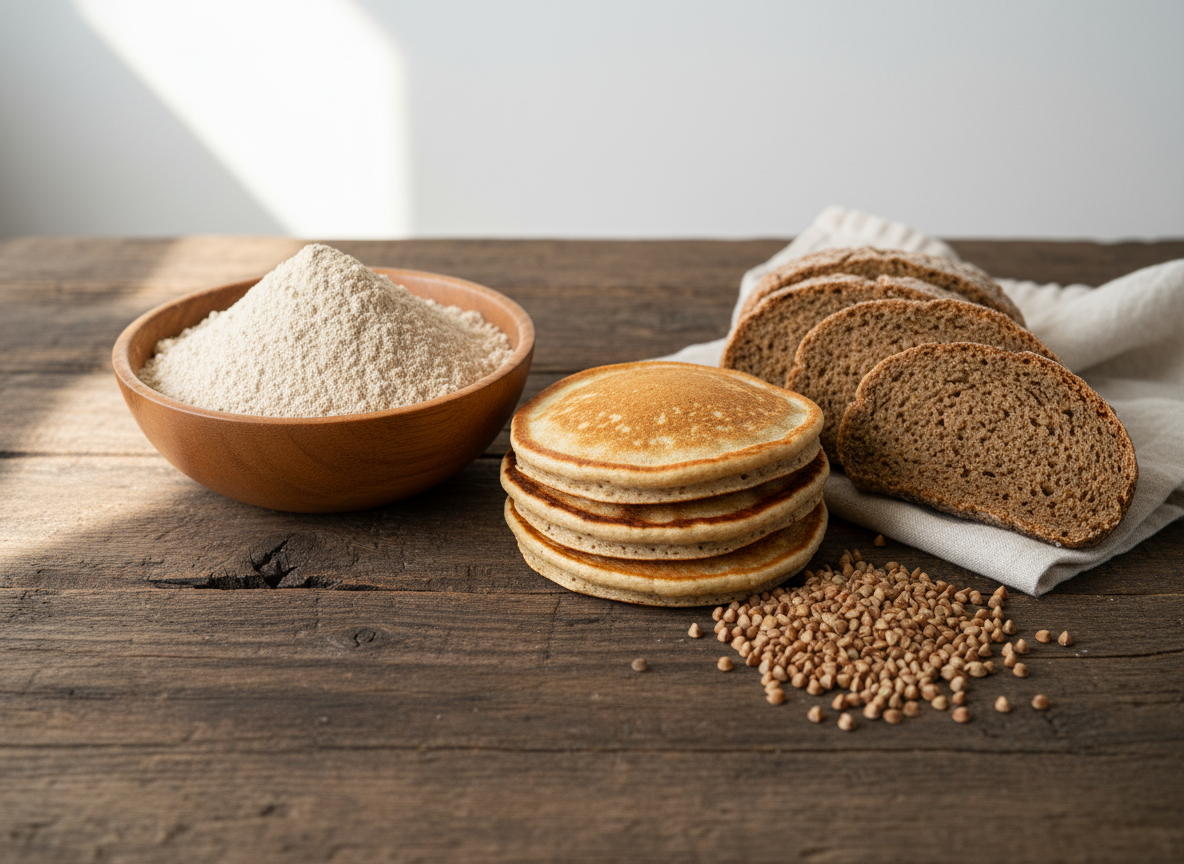
Buckwheat flour has become increasingly popular among health-conscious individuals, gluten-free eaters, and home bakers looking for nutritious alternatives to refined flour. Known for its earthy flavor and impressive nutritional value, buckwheat flour stands out as a versatile ingredient that supports both health and taste.
Despite its name, buckwheat flour has nothing to do with wheat. It is naturally gluten-free and packed with fiber, plant-based protein, antioxidants, and essential minerals. From pancakes and bread to noodles and baked goods, buckwheat flour offers countless culinary possibilities.
What Is Buckwheat Flour?
Buckwheat flour is produced by grinding buckwheat groats into a fine or semi-fine powder. Buckwheat itself is a seed, not a grain, which classifies it as a pseudocereal.
Unlike traditional flours, buckwheat flour delivers a unique combination of nutrients and flavor. It is widely used in both sweet and savory dishes and plays a key role in many traditional cuisines around the world.
Why Buckwheat Flour Is Not Wheat
One of the biggest misconceptions is that buckwheat flour contains wheat. In reality:
-
Buckwheat is not related to wheat
-
It does not contain gluten
-
It is safe for people with celiac disease
The name “buckwheat” comes from the resemblance of its seeds to beech nuts, not from wheat itself.
Origin and History of Buckwheat Flour
Buckwheat originated in Central and East Asia thousands of years ago. Over time, it spread to Europe and later to North America. It became popular because it:
-
Grows quickly
-
Thrives in poor soil
-
Requires minimal fertilizers
Historically, buckwheat flour was a staple food for farmers and rural communities due to its affordability and nutritional value.
Types of Buckwheat Flour
Light Buckwheat Flour
Made from hulled buckwheat seeds, this flour has a lighter color and milder taste. It is ideal for baking cakes, muffins, and pancakes.
Dark Buckwheat Flour
This version includes the hulls, resulting in a darker color and stronger flavor. It is higher in fiber and minerals.
Whole Buckwheat Flour
Whole buckwheat flour retains all parts of the seed and offers the most nutrition. It is commonly used in rustic breads and savory dishes.
Nutritional Profile of Buckwheat Flour
Buckwheat flour is highly nutritious compared to refined flours.
Key nutrients include:
-
Plant-based protein
-
Dietary fiber
-
Magnesium
-
Iron
-
Zinc
-
Phosphorus
-
Antioxidants such as rutin
This combination makes buckwheat flour beneficial for overall health and long-term wellness.
Health Benefits of Buckwheat Flour
Gluten-Free Advantage
Buckwheat flour is naturally gluten-free, making it suitable for individuals with gluten intolerance or celiac disease.
Heart Health Support
Buckwheat flour contains rutin, a powerful antioxidant known to:
-
Improve blood circulation
-
Reduce inflammation
-
Lower bad cholesterol levels
Blood Sugar Regulation
Due to its low glycemic index and high fiber content, buckwheat flour helps prevent sudden spikes in blood sugar levels.
Digestive Benefits
Fiber supports gut health, promotes regular bowel movements, and improves digestion.
Weight Management Support
Protein and fiber increase satiety, helping reduce overeating and unhealthy snacking.
Buckwheat Flour vs Wheat Flour
| Feature | Buckwheat Flour | Wheat Flour |
|---|---|---|
| Gluten | No | Yes |
| Fiber | High | Low |
| Nutrients | Rich | Limited |
| Glycemic Index | Lower | Higher |
| Suitable for Celiac | Yes | No |
Buckwheat Flour vs Other Gluten-Free Flours
Compared to rice flour, corn flour, and tapioca flour, buckwheat flour provides:
-
More protein
-
Better fiber content
-
Stronger flavor
It also offers better nutritional balance than many refined gluten-free flours.
Buckwheat Flour for Gluten-Free Diets
Buckwheat flour is one of the most reliable ingredients in gluten-free baking because it:
-
Mimics grain-like texture
-
Binds well with eggs and liquids
-
Provides a satisfying taste
It is often combined with starches or other flours for improved structure.
Buckwheat Flour for Diabetics
Buckwheat flour supports blood sugar control by:
-
Slowing carbohydrate digestion
-
Improving insulin sensitivity
-
Reducing glucose absorption
Many nutrition experts recommend buckwheat flour for diabetic-friendly diets.
Buckwheat Flour and Weight Loss
Replacing refined flour with buckwheat flour can support weight loss because it:
-
Keeps you full longer
-
Reduces calorie intake naturally
-
Stabilizes energy levels
It is especially effective when combined with a balanced diet.
Is Buckwheat Flour Keto-Friendly?
Buckwheat flour is not suitable for ketogenic diets due to its carbohydrate content. However, it is excellent for low-glycemic and whole-food-based eating plans.
How Buckwheat Flour Is Made
-
Buckwheat seeds are harvested
-
Hulls are removed (optional)
-
Seeds are cleaned and dried
-
Seeds are ground into flour
Stone-ground buckwheat flour retains the most nutrients and flavor.
Taste, Texture, and Baking Behavior
Buckwheat flour has:
-
Earthy flavor
-
Slightly nutty taste
-
Dense texture
It absorbs more liquid than wheat flour, which affects baking ratios.
Baking With Buckwheat Flour
When baking with buckwheat flour:
-
Increase moisture slightly
-
Avoid overmixing
-
Combine with binding agents
It works well in pancakes, muffins, and flatbreads.
Cooking Uses of Buckwheat Flour
Buckwheat flour is widely used in:
-
Crepes
-
Pancakes
-
Noodles
-
Bread
-
Crackers
-
Cookies
Its versatility makes it ideal for both sweet and savory recipes.
Popular Buckwheat Flour Recipes
Buckwheat Pancakes
Soft, fluffy, and naturally gluten-free.
Buckwheat Bread
Dense, nutritious, and filling.
Buckwheat Noodles
Traditional soba noodles made from buckwheat flour.
Buckwheat Cookies
Nutty-flavored cookies perfect for healthy snacking.
How to Substitute Buckwheat Flour Correctly
-
Replace up to 50% of wheat flour
-
Add extra liquid
-
Use eggs or flaxseed for binding
This ensures better texture and flavor.
Baking Tips for Best Results
-
Let batter rest before baking
-
Combine with lighter flours if needed
-
Measure carefully
-
Use fresh flour
Storage and Shelf Life
Store buckwheat flour in:
-
Airtight containers
-
Cool, dry places
Shelf life ranges from 6 to 12 months.
Possible Side Effects and Allergies
Buckwheat allergies are rare but possible. Symptoms may include itching or digestive discomfort. Always introduce gradually.
How to Choose High-Quality Buckwheat Flour
Look for:
-
Gluten-free certification
-
Organic sourcing
-
Stone-ground labeling
-
Fresh smell
Buckwheat Flour in Global Cuisines
-
Japan: Soba noodles
-
France: Buckwheat galettes
-
Russia: Blinis
-
Korea: Memil dishes
Environmental Benefits of Buckwheat Farming
Buckwheat:
-
Grows quickly
-
Improves soil health
-
Requires fewer pesticides
-
Supports pollinators
Common Myths About Buckwheat Flour
Myth: Buckwheat flour contains wheat
Fact: It is completely wheat-free
Myth: Buckwheat flour tastes bitter
Fact: When prepared correctly, it has a pleasant nutty flavor
Conclusion
Buckwheat flour is a powerful, nutritious, and versatile ingredient suitable for a wide range of diets. Its gluten-free nature, rich nutrient profile, and culinary flexibility make it an excellent alternative to refined flours. Whether you are baking, cooking, or improving your overall health, buckwheat flour is a smart and sustainable choice.
Frequently Asked Questions (FAQs)
Is buckwheat flour gluten-free?
Yes, buckwheat flour is naturally gluten-free.
Can buckwheat flour replace wheat flour completely?
It can, but blending with other flours gives better results.
Is buckwheat flour healthy?
Yes, it is rich in fiber, protein, and antioxidants.
Does buckwheat flour help with weight loss?
Yes, it supports fullness and stable energy levels.
Can diabetics eat buckwheat flour?
Yes, it helps regulate blood sugar levels.