
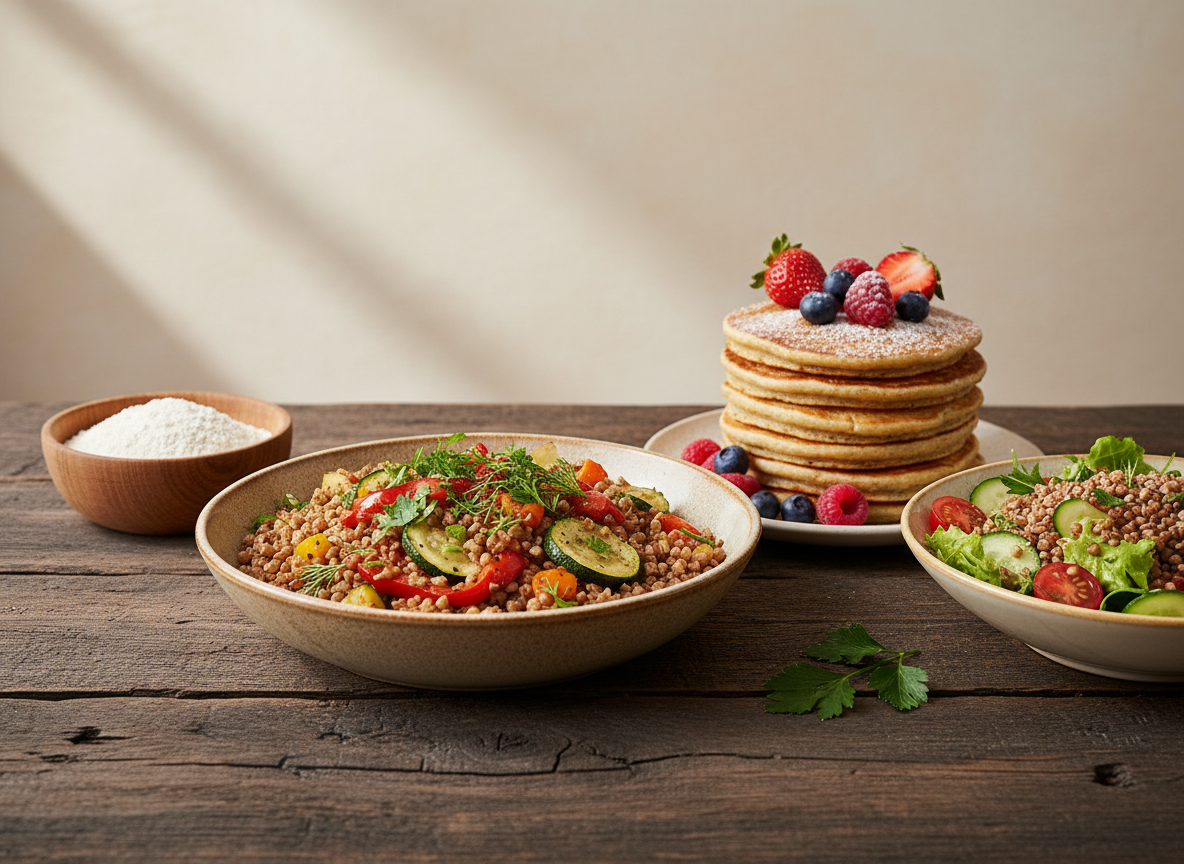
Buckwheat is one of those underrated superfoods that quietly delivers powerful nutrition, incredible versatility, and rich flavor. Despite its name, buckwheat is not wheat at all — it’s a gluten-free seed packed with protein, fiber, and essential minerals. Across cultures, buckwheat has been used for centuries in comforting porridges, savory noodles, hearty pancakes, and nourishing salads.
In this in-depth guide, you’ll discover the best buckwheat recipes, cooking techniques, nutritional insights, and creative ideas for every meal of the day. Whether you’re new to buckwheat or looking to expand your recipe collection, this article covers everything you need.
What Is Buckwheat?
Buckwheat is a pseudocereal, meaning it’s used like a grain but doesn’t belong to the grass family. It’s closely related to rhubarb and sorrel, making it naturally gluten-free and suitable for people with gluten sensitivities.
Buckwheat has a nutty, earthy flavor and a soft yet slightly chewy texture when cooked properly. It comes in several forms, including whole groats, roasted groats (kasha), and buckwheat flour.
Nutritional Benefits of Buckwheat
Buckwheat recipes are not only tasty but also incredibly nutritious.
Key Nutritional Highlights
-
High-quality plant protein
-
Rich in dietary fiber
-
Contains magnesium, manganese, and iron
-
Low glycemic index
-
Naturally gluten-free
Health Benefits
-
Supports heart health
-
Helps regulate blood sugar
-
Improves digestion
-
Promotes satiety and weight management
-
Supports gut health
This nutritional profile makes buckwheat recipes ideal for vegans, athletes, diabetics, and health-conscious eaters.
Types of Buckwheat Used in Recipes
1. Buckwheat Groats
Whole, hulled seeds with a mild flavor. Perfect for salads, bowls, and porridge.
2. Kasha (Roasted Buckwheat)
Deep, nutty flavor. Ideal for savory buckwheat recipes.
3. Buckwheat Flour
Used in baking pancakes, bread, crepes, and noodles.
4. Buckwheat Noodles
Common in Asian cuisine, especially soba noodles.
How to Cook Buckwheat Perfectly
Basic Buckwheat Cooking Method
-
Rinse buckwheat groats thoroughly
-
Use a 1:2 ratio (buckwheat to water)
-
Bring to a boil, then simmer for 10–15 minutes
-
Let rest covered for 5 minutes
-
Fluff with a fork
Tip: Toasting buckwheat beforehand enhances its flavor.
Buckwheat Porridge
A creamy, comforting breakfast similar to oatmeal.
Ingredients:
-
Buckwheat groats
-
Almond milk or water
-
Cinnamon
-
Honey or maple syrup
-
Fresh fruit
Why it works:
This is one of the simplest buckwheat recipes, perfect for a warm, nourishing start to the day.
Buckwheat Pancakes
Light, fluffy, and gluten-free.
Highlights:
-
Made with buckwheat flour
-
Naturally nutty flavor
-
Pairs well with berries and yogurt
Buckwheat Breakfast Bowl
A protein-packed bowl with:
-
Cooked buckwheat
-
Nuts and seeds
-
Banana or apple
-
Nut butter
Buckwheat Vegetable Pilaf
A hearty side dish packed with vegetables.
Key Ingredients:
-
Buckwheat groats
-
Onion, carrot, bell pepper
-
Garlic and herbs
Buckwheat Stir-Fry
A healthy alternative to rice stir-fry.
Why it’s popular:
-
Absorbs sauces well
-
Keeps texture
-
Adds protein and fiber
Stuffed Peppers With Buckwheat
A filling, plant-based meal using buckwheat as the base.
Buckwheat Bread
Dense, flavorful, and gluten-free.
Perfect for:
-
Sandwiches
-
Toast
-
Meal prep
Buckwheat Crepes
Thin, savory crepes popular in French cuisine.
Fillings ideas:
-
Spinach and mushrooms
-
Cheese and herbs
-
Smoked salmon
Buckwheat Muffins
Moist, hearty, and naturally filling.
Vegan & Gluten-Free Buckwheat Recipes
Buckwheat recipes naturally fit vegan and gluten-free diets.
Vegan Buckwheat Buddha Bowl
-
Cooked buckwheat
-
Roasted vegetables
-
Tahini dressing
Buckwheat Veggie Burgers
Firm texture makes buckwheat ideal for patties.
Buckwheat Salad
Light, refreshing, and protein-rich.
Traditional Buckwheat Recipes Around the World
Japan – Soba Noodles
Thin buckwheat noodles served hot or cold.
Eastern Europe – Kasha
A staple dish often served with mushrooms or onions.
France – Galettes
Savory buckwheat crepes from Brittany.
Russia – Buckwheat Porridge
Often served with butter or vegetables.
Tips for Cooking With Buckwheat
-
Rinse before cooking to remove bitterness
-
Toast for deeper flavor
-
Don’t overcook — it becomes mushy
-
Use herbs and spices generously
-
Combine with legumes for complete protein
Common Mistakes to Avoid
-
Using too much water
-
Skipping rinsing
-
Treating buckwheat like rice
-
Overmixing buckwheat flour batters
Why Buckwheat Recipes Are Gaining Popularity
Buckwheat recipes are trending because they:
-
Fit modern dietary needs
-
Support sustainable eating
-
Offer versatility
-
Provide superior nutrition
-
Taste amazing
As more people move toward whole foods and gluten-free alternatives, buckwheat is stepping into the spotlight.
Conclusion
Buckwheat is far more than a niche health ingredient — it’s a culinary powerhouse that deserves a permanent place in your kitchen. From comforting breakfasts to hearty dinners and baked goods, buckwheat recipes offer endless possibilities for healthy, satisfying meals.
Whether you’re gluten-free, vegan, or simply curious about nutritious ingredients, buckwheat delivers flavor, texture, and nourishment in every bite. By experimenting with different cooking methods and global recipes, you can transform this humble seed into unforgettable dishes.
FAQs
Is buckwheat gluten-free?
Yes, buckwheat is completely gluten-free and safe for people with celiac disease.
Does buckwheat taste bitter?
When cooked properly, buckwheat has a mild, nutty flavor. Rinsing helps reduce bitterness.
Can buckwheat replace rice?
Absolutely. Many buckwheat recipes use it as a rice substitute.
Is buckwheat good for weight loss?
Yes. High fiber and protein help keep you full longer.
Can I eat buckwheat every day?
Yes, buckwheat is safe and nutritious for daily consumption when part of a balanced diet.
What’s the best way to store buckwheat?
Store in an airtight container in a cool, dry place.