
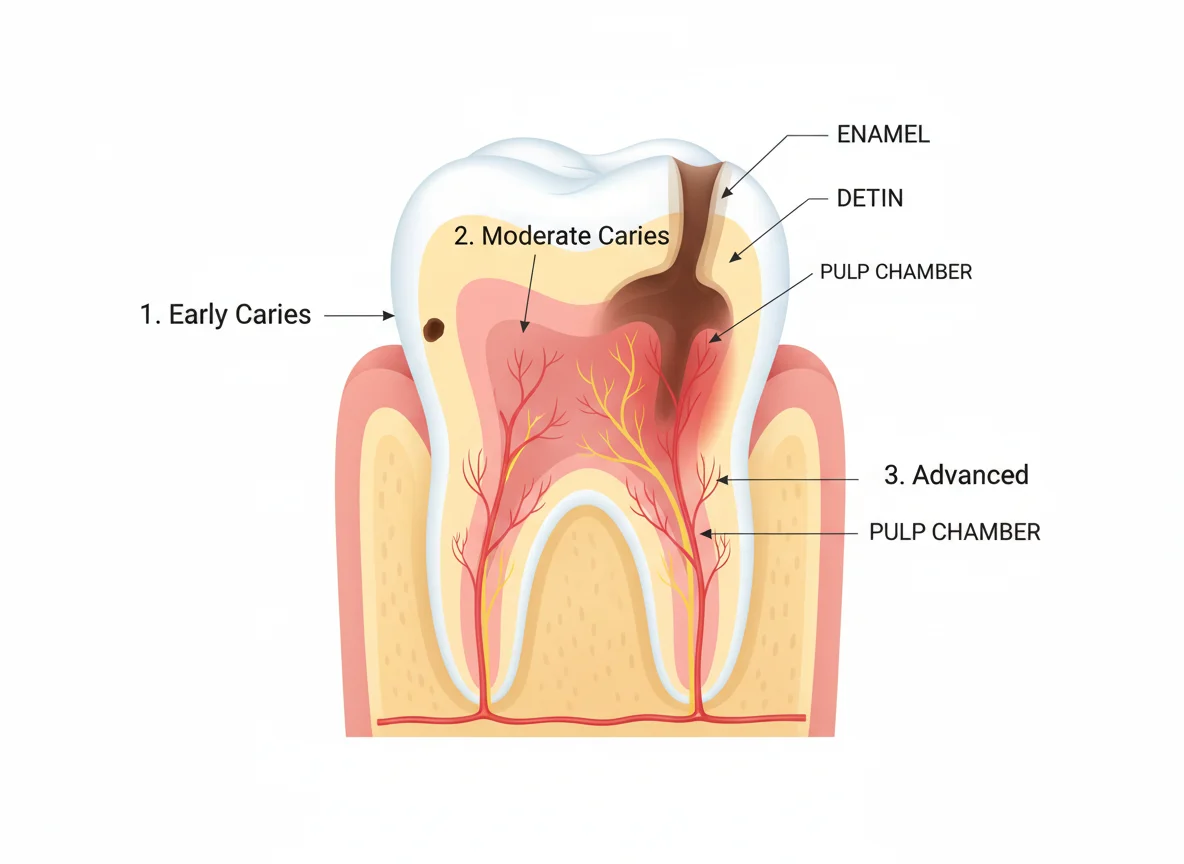
Many people experience tooth discomfort at some point, but not everyone immediately knows the cause. One of the most common dental problems worldwide is tooth decay, commonly known as a cavity. A question that people frequently search online is what does a cavity look like, especially when they notice a strange spot, discoloration, or sensitivity on their teeth.
Understanding what cavities look like at different stages can help you catch tooth decay early, avoid pain, and prevent costly dental treatments. This in-depth guide explains what does a cavity look like, how cavities develop, and how to distinguish them from harmless stains or discoloration.
What Is a Cavity?
A cavity is a permanently damaged area in the hard surface of a tooth that develops into tiny openings or holes. Cavities are caused by a combination of bacteria, frequent snacking, sugary drinks, and poor oral hygiene.
When bacteria in your mouth feed on sugar, they produce acids. These acids slowly wear away tooth enamel, leading to decay. Over time, this process changes how the tooth looks, feels, and functions.
What Does a Cavity Look Like in the Early Stages?
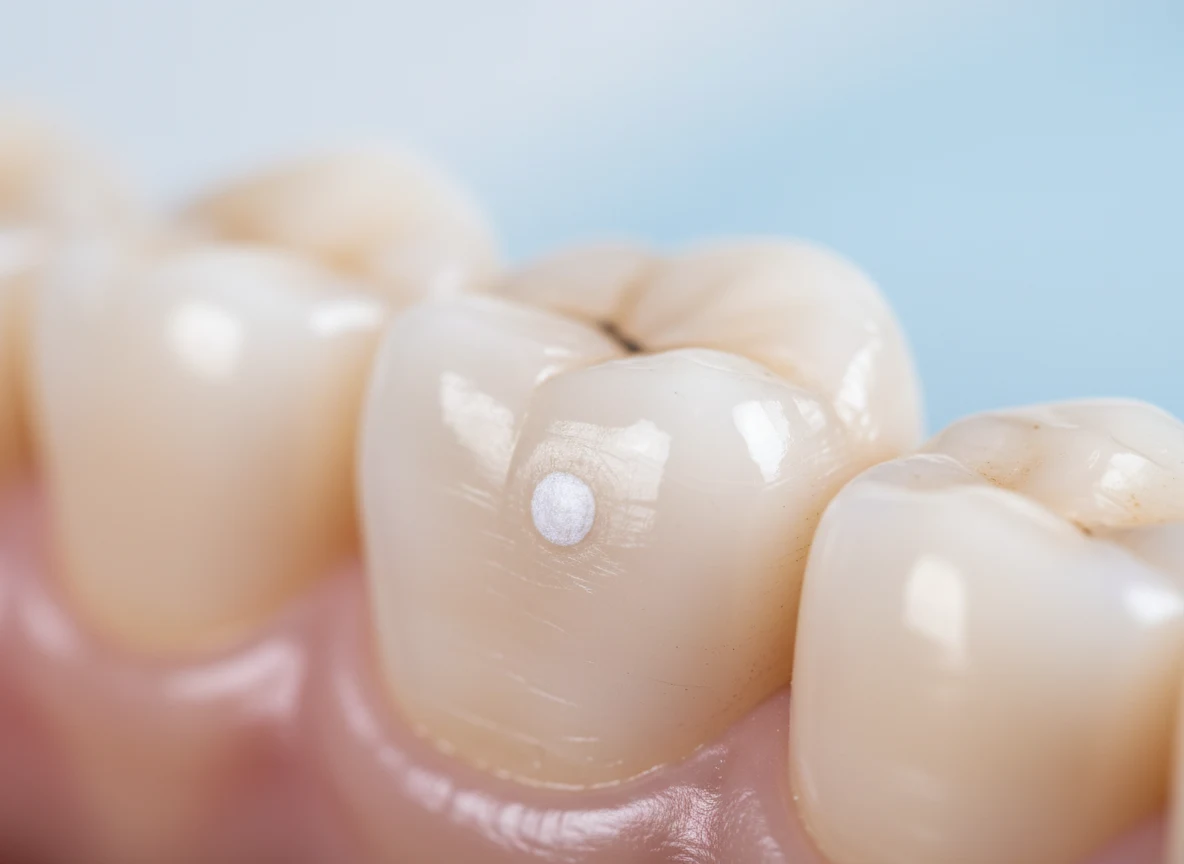
In the earliest phase, cavities are often hard to detect with the naked eye. Many people ask what does a cavity look like at first, and the answer is surprisingly subtle.
Early cavity appearance includes:
-
Chalky white spots on the tooth
-
Dull areas that lack shine
-
Slight roughness when touched with the tongue
-
No visible hole yet
These white spots indicate enamel demineralization. At this stage, the damage may still be reversible with fluoride treatment and proper oral care.
What Does a Cavity Look Like When It Gets Worse?
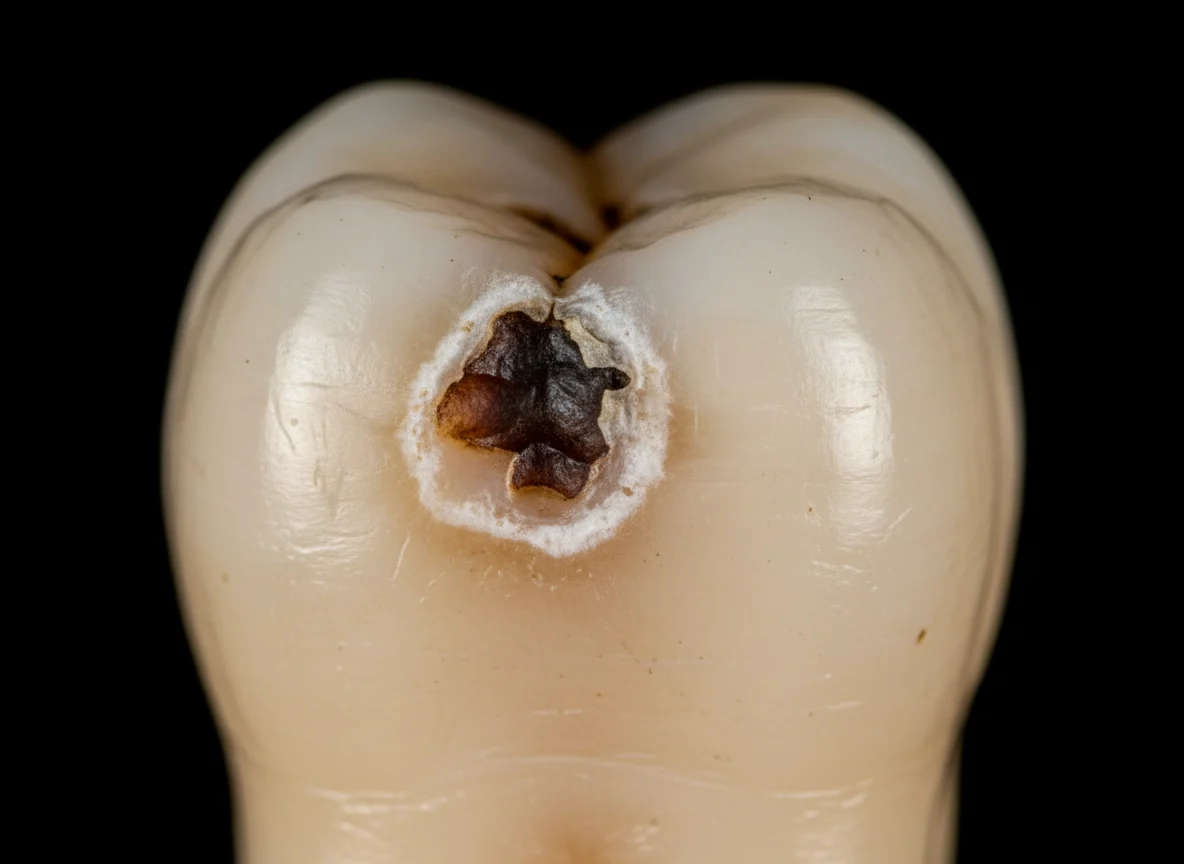
As tooth decay progresses, the visual signs become more obvious. If untreated, the cavity moves deeper into the tooth, affecting dentin and eventually the pulp.
Advanced cavity appearance:
-
Brown or dark spots
-
Visible holes or pits
-
Cracked or broken tooth edges
-
Black discoloration
-
Swollen or red gums near the tooth
At this stage, pain and sensitivity often accompany the visible damage.
Types of Cavities and How They Appear
Not all cavities look the same. Their appearance depends on where they form and how fast they develop.
Smooth Surface Cavities
These cavities develop on the flat surfaces of teeth.
What does a cavity look like on smooth surfaces?
-
White spots at first
-
Gradual yellow or brown discoloration
-
Shallow indentation over time
These cavities grow slowly and are often preventable with good brushing habits.
Pit and Fissure Cavities
These cavities form in the grooves of molars and premolars.
Appearance includes:
-
Dark lines in tooth grooves
-
Small holes that trap food
-
Brown or black dots
Because these grooves are deep, food and bacteria easily get trapped.
Root Cavities
Root cavities occur near the gum line, especially in older adults.
What does a cavity look like near the gum line?
-
Soft, darkened areas
-
Yellow or brown discoloration
-
Gum recession exposing tooth roots
Root cavities spread quickly due to the lack of protective enamel on roots.
What Does a Cavity Look Like on Different Teeth?
Cavities can appear differently depending on the tooth involved.
Front Teeth
-
White or brown spots
-
Noticeable discoloration
-
Small holes visible when smiling
Molars
-
Dark grooves
-
Deep pits
-
Food constantly stuck
Between Teeth
-
Hard to see without floss or X-rays
-
Dark shadows between teeth
-
Sensitivity when flossing
Color Changes: White, Brown, and Black Cavities
Color plays a major role in identifying decay.
White Cavities
-
Early stage
-
Indicates mineral loss
-
Often reversible
Brown Cavities
-
Moderate decay
-
Enamel damage present
-
Needs professional treatment
Black Cavities
-
Advanced decay
-
Tooth structure compromised
-
Usually painful
So when people ask what does a cavity look like, color is one of the clearest indicators.
Symptoms That Appear Alongside Cavities
Visual signs are not the only clues. Cavities often cause symptoms such as:
-
Tooth sensitivity to hot or cold
-
Sharp pain when biting
-
Bad breath
-
Unpleasant taste
-
Swollen gums
Sometimes, cavities show no symptoms until serious damage occurs.
What Does a Cavity Look Like vs. a Stain?
Many people confuse cavities with stains.
Stains
-
Smooth surface
-
No pain
-
Often caused by coffee, tea, or smoking
-
Do not change tooth texture
Cavities
-
Rough or sticky feeling
-
May hurt
-
Often worsen over time
-
May form holes
If you’re unsure what does a cavity look like compared to a stain, texture and sensitivity are key differences.
Cavities in Children vs. Adults
Children
-
White or yellow spots
-
Rapid progression
-
Often caused by sugary snacks or bottles
Adults
-
Root cavities
-
Dark discoloration
-
Linked to dry mouth or gum recession
Early detection is especially important for children to prevent long-term dental issues.
How Dentists Identify Cavities
Dentists use several methods to diagnose cavities accurately:
-
Visual examination
-
Dental probes
-
X-rays
-
Laser detection tools
Even if you can’t clearly see what does a cavity look like, a dentist can detect it early.
Can Cavities Heal on Their Own?
Once enamel breaks and a hole forms, cavities cannot heal naturally. However:
-
Early white spots may remineralize
-
Fluoride can strengthen enamel
-
Proper hygiene can stop progression
Advanced cavities always require professional treatment.
How to Prevent Cavities
Preventing cavities is easier than treating them.
Best practices include:
-
Brushing twice daily
-
Flossing every day
-
Using fluoride toothpaste
-
Limiting sugary foods
-
Regular dental checkups
Good habits reduce the risk of ever wondering what does a cavity look like on my tooth.
When to See a Dentist
You should see a dentist if you notice:
-
Dark spots on teeth
-
Tooth pain or sensitivity
-
Holes or cracks
-
Persistent bad breath
Early intervention saves teeth and reduces treatment costs.
Conclusion
Understanding what does a cavity look like empowers you to take control of your oral health. Cavities can appear as white spots, brown discoloration, or black holes depending on their stage and location. While early cavities may be subtle and painless, advanced decay is often obvious and uncomfortable.
By recognizing the signs early, maintaining proper oral hygiene, and visiting the dentist regularly, you can prevent cavities from damaging your smile. Knowledge is the first step toward healthier teeth and long-lasting dental wellness.
Frequently Asked Questions (FAQs)
1. What does a cavity look like at the very beginning?
Early cavities usually appear as white or chalky spots without pain.
2. Can a cavity be invisible?
Yes, cavities between teeth or under fillings may not be visible without X-rays.
3. What does a cavity look like on an X-ray?
Cavities appear as dark areas where tooth density is reduced.
4. Are black spots always cavities?
Not always, but black spots often indicate advanced decay and should be checked.
5. What does a cavity look like on a baby tooth?
It often starts as white or yellow spots and can progress quickly.